

Pregnancy & Baby Co

Why a Specialist Obstetrician Spent Thirty Years Waiting to Build This Brand
There is a particular kind of question that a doctor learns to listen for over years of practice. Not the medical questions — those are expected, and there is a framework for answering them. The other kind. The ones asked quietly, sometimes almost apologetically, at the end of a consultation. The ones where a patient shows you something personal, looks at you carefully, and asks: ‘Is there anything I can do about this?’ For thirty years, those questions arrived in my consulting room wearing different clothes. About the stretching belly skin that itched unbearably in the second trimester. About stretch marks appearing faster than expected, despite consistent moisturising. About the hair that began falling out six weeks after birth — in quantities that shocked even the most composed new mothers. About the hormonal changes to the face that no one had warned them about. And, again and again, about the scar. “After thirty years of caring for pregnant women, I knew exactly what they needed. What I couldn’t find was a product range worthy of that knowledge.” — A/Prof. Indika Alahakoon, Co-Founder, Pregnancy and Baby Co. Thirty Years. The Same Questions. I am a specialist obstetrician and maternal fetal medicine expert. I have spent my career at Westmead Hospital and in private practice at Bella Vista and Westmead, caring for pregnancies that range from the straightforward to the extremely complex. I have been Head of the Maternal Fetal Medicine Unit at Westmead Hospital, where the most complicated and high-risk pregnancies in western Sydney are managed. I hold a PhD from the University of Sydney and the CMFM subspecialty qualification — the highest level of specialist training available in maternal fetal medicine. I say this not to recite credentials, but to provide context: I have spent thirty years at the very centre of pregnancy care. And in those thirty years, the questions my patients asked me about their skin, their hair, and their bodies were never adequately answered by the products the market offered them. This is not a small observation. These are not trivial concerns. Stretch marks affect up to 90 per cent of pregnant women. Postpartum hair loss — telogen effluvium — affects approximately 92 per cent of new mothers. Pregnancy melasma affects between 32 and 75 per cent of pregnant women. These are near-universal experiences. And yet the quality of clinical evidence behind the products sold to address them was, in most cases, far below the standard I would apply to any other clinical recommendation. The C-Section Scar Problem The most urgent and persistent gap was in caesarean scar management. I have performed thousands of caesarean sections across my career. It is a procedure I know intimately — the layers of tissue, the healing timeline, the complications that can arise, and the outcomes that matter most to patients. And I know that one of those outcomes — the appearance and behaviour of the scar — is consistently underaddressed in postpartum care. C-section scars sit in one of the most mechanically challenging locations on the body: the lower abdomen, at the waistband line, subject to constant pressure from sitting, standing, lifting, and the physical demands of caring for a newborn. They heal from the inside out. They can become hypersensitive — painful to the touch, to clothing contact, to the gentlest pressure. They can develop tethering, where the healed scar adheres to the underlying fascia, creating the pulling sensation that many C-section mothers describe for months or years after their birth. And in some patients — particularly those with Fitzpatrick III–VI skin tones, which are well-represented in Australia’s multicultural population — they can develop keloid scarring, where the scar tissue grows beyond the original wound boundary. At their six-week and three-month check-ups, my patients would show me their scars and ask what they could use. What they could do. How they could minimise the keloid formation that was beginning to appear, or soften the raised tissue, or reduce the redness that had not faded as they had hoped. When I looked at what was available, I was consistently disappointed. There was no well-defined approach. No product range that had been designed specifically for the C-section wound and its particular challenges. I researched, improvised, and recommended the best of what existed — but I knew it was not good enough. My patients deserved better. “My patients would come in and show me their caesarean scar and ask what they could do. Some were worried about keloid formation. Some were just uncomfortable. I would look at what was available and think — none of this is what I would recommend. None of this is good enough.” — A/Prof. Indika Alahakoon The Decision to Build Something Better The conversations continued for years. And then, at some point — the kind of point that arrives not as a single moment of clarity but as the accumulated weight of many moments — I decided that if the right products did not exist, I would develop them myself. This decision was made easier by the involvement of my close friend and colleague, Katie Midson. Katie has worked alongside me as my practice development manager, and she has observed these patient conversations from the inside — understanding not just what patients need clinically, but how they experience their care, what questions they carry home with them, and what the market consistently fails to provide. Where my expertise is clinical, Katie’s is relational. Together, that combination shaped everything about how Pregnancy and Baby Co. was built. We did not approach the development of our products as marketers asking what would sell. We approached it as a clinician and a patient advocate asking what was genuinely needed. What did the evidence support? What did thirty years of patient conversations point to? What would I be confident recommending to my own patients — and confident putting my name on? The First Products: Clinical Need, Australian Ingredient The C-Section Silicone Scar Strips were the first product to be formalised. Medical-grade silicone sheeting is the gold standard in surgical scar management — supported by systematic reviews, meta-analyses, and clinical guidelines from plastic and reconstructive surgery. The Pregnancy and Baby Co. strips are now registered with the Therapeutic Goods Administration as a Medical Device Class 1, ARTG 519747 — a government verification of their therapeutic function that no consumer scar product can match without the same regulatory rigour. The Kakadu Plum Belly Oil emerged from a different but equally urgent need: the stretching, itching, drying belly skin of pregnancy that deserved an active ingredient rather than a passive moisturiser. Kakadu Plum — the small green fruit native to northern Australia, treasured by Indigenous communities for thousands of years — contains the highest natural concentration of Vitamin C of any known source: up to 5,300mg per 100g, up to 100 times more than an orange. Vitamin C stimulates collagen synthesis at the dermal level — the same biological mechanism that supports the elasticity of stretching skin. Combined with Lemon Myrtle for its aromatherapeutic benefit for nausea, and Rosehip for its clinical evidence in scar and skin repair, the Belly Oil became the first product in what is now the Kakadu Plum Collection. These were not products built on trend research or focus groups. They were built on thirty years of listening. What Comes Next Pregnancy and Baby Co. is still growing. The Kakadu Plum Collection is expanding — with products addressing postpartum hair recovery, pregnancy facial skincare, breastfeeding-specific concerns, and more. Each new product answers a question that has been raised in my consulting room. Each one is developed with the same standard I apply to everything in my clinical practice: what does the evidence say, and is this truly the best we can do for the women we care about? My patients trusted me with the most significant health journey of their lives. Pregnancy and Baby Co. is my way of continuing to show up for them — beyond the consulting room, beyond the birth, and into every stage of the journey that follows. “We built this brand because the women in our care deserved better. Thirty years of clinical practice was not the starting point for Pregnancy and Baby Co. It was the foundation.” — A/Prof. Indika Alahakoon & Ms. Katie Midson, Co-Founders, Pregnancy and Baby Co. — A/Prof. Indika Alahakoon is a Specialist Obstetrician and Maternal Fetal Medicine Expert with 30+ years of experience. She holds MBBS(Hons I), FRANZCOG, DDU, CMFM, and a PhD from the University of Sydney. She is an Associate Professor at the University of Sydney, Director of the Centre for Women’s Ultrasound, and former Head of the Maternal Fetal Medicine Unit at Westmead Hospital. She is the Co-Founder of Pregnancy and Baby Co. alongside her friend and practice development manager, Ms. Katie Midson. Clinical profile: indika-alahakoon.com.au | Brand: pregnancyandbabyco.com.au
Learn more
How to Care for Your C-Section Scar After Birth
A Complete Recovery Guide for New Mothers By A/Prof. Indika AlahakoonSpecialist Obstetrician | Maternal Fetal Medicine Expert | Mum of FourPregnancy & Baby Co You came home from hospital with your beautiful new baby. You learned how to feed, settle, change nappies, and adjust to a completely new chapter of life. But after major abdominal surgery, many women are left wondering: “What am I actually supposed to do with my C-section scar?” If this sounds familiar, you are not alone. Approximately one in three Australian babies are born by caesarean section, meaning more than 100,000 women each year begin the journey of C-section recovery. The surgery itself is carefully planned. But the weeks and months after birth often receive far less attention. Your scar is not just a mark on your skin. It is part of your recovery, your healing, and your motherhood story. With the right care at the right time, you can support your body as it heals. What Happens After a Caesarean Section? A caesarean section involves delivering your baby through an incision made through the abdomen and uterus. Like all surgical wounds, your body heals through stages. During this process, your body creates collagen to repair the area. Sometimes collagen production can become excessive, causing scars to become: • Raised• Thickened• Firm• Red or darker in colour• Itchy or uncomfortable These are known as hypertrophic or keloid scars. While some factors are genetic, early scar care may help support a softer, flatter, more comfortable scar. Why C-Section Scar Care Matters The postpartum period is incredibly demanding. Your body is healing while you are: • Feeding your baby• Sleeping in short stretches• Recovering hormonally• Adjusting emotionally• Caring for everyone else Often, your own recovery becomes the last priority. But your healing matters too. Caring for your scar is not about chasing perfection. It is about comfort, confidence, movement, and giving your body the support it deserves after everything it has done. The 3 Stages of C-Section Scar Recovery Stage 1: Early Healing Birth to approximately 3 weeks Goal: Protect the wound and allow natural healing. During this stage: ✓ Keep your incision clean and dry✓ Follow your hospital discharge advice✓ Wear loose, comfortable clothing✓ Avoid products directly over the wound✓ Watch for signs of infection including increasing redness, swelling, discharge, worsening pain, or fever Do not apply oils, creams, silicone products, or massage until your wound has completely closed. Stage 2: Supporting Your Scar Around 3–6 weeks postpartum Once your doctor confirms your wound has fully healed, you can begin supporting your scar. This may include: ✓ Gentle scar massage✓ Keeping the area moisturised✓ Supporting flexibility of the tissue✓ Beginning silicone scar therapy Silicone therapy is one of the most researched approaches for supporting surgical scar healing. Why Silicone Is Used for C-Section Scars Silicone has been used in scar management for over 30 years and is recommended worldwide for hypertrophic and keloid scar management. Silicone works by helping create an ideal healing environment over the scar. It supports hydration of the scar tissue and assists with regulating collagen formation during healing. With consistent use, silicone may help scars become: • Softer• Flatter• Less raised• Less visibly red Pregnancy & Baby Co C-Section Silicone Scar Sheets Our C-Section Silicone Scar Sheets were created because women deserve better support after birth. Designed by a specialist obstetrician, they provide targeted postpartum scar care that fits into real motherhood. ✓ TGA Registered Medical Device✓ ARTG 519747✓ Designed for C-section scars✓ Transparent and comfortable✓ Reusable silicone sheets✓ Safe during breastfeeding Use only once your wound has fully healed and your healthcare provider has confirmed it is safe. Stage 3: Long-Term Scar Recovery 6 weeks to 6 months postpartum Scar healing continues long after the outside of the wound has closed. During this phase: ✓ Continue silicone therapy✓ Introduce scar massage✓ Support movement and flexibility✓ Protect your scar from sun exposure Scar tissue can continue changing for 12–24 months after surgery, so it is never too late to begin caring for your scar. The Pregnancy & Baby Co C-Section Recovery System Created from decades of caring for pregnant and postpartum women. C-Section Silicone Scar Sheets For ongoing silicone scar therapy. C-Section Silicone Scar Gel A lightweight silicone gel designed for daily scar support and areas where strips may not easily adhere. C-Section Massage Roller Created to support gentle scar massage during later recovery. Complete C-Section Recovery Kit A complete three-step approach for women wanting simple, supportive postpartum scar care. Because recovering from birth should include caring for you too. Frequently Asked Questions When can I start using silicone strips after my C-section? Only once your wound has completely closed and your doctor, midwife, or healthcare provider confirms it is safe. This is commonly around 3–4 weeks but varies between individuals. Can I use silicone strips while breastfeeding? Yes. Pregnancy & Baby Co Silicone Scar Sheets are suitable during breastfeeding. How long should I use silicone scar products? Many women use silicone scar therapy consistently for several months while their scar matures. Is scar massage important? Gentle scar massage after healing may help improve tissue movement, comfort, and flexibility. Always wait until your healthcare provider confirms your wound has healed. My C-section was months ago. Is it too late? No. Scars continue changing for many months after birth. Starting supportive care can still be beneficial. A Final Note From A/Prof. Indika Alahakoon After caring for thousands of women, one thing has always stood out. Mothers receive endless information about caring for their babies, but not enough guidance about caring for themselves. Your recovery matters. Your comfort matters. Your body has done something extraordinary. Pregnancy & Baby Co was created to help women feel supported through every stage of the journey from bump to baby. Shop the Pregnancy & Baby Co C-Section Recovery Range Designed by a Specialist ObstetricianSupporting Australian mothers through pregnancy, birth, and beyond. Disclaimer: This information is general education only and does not replace personalised medical advice. Always speak with your GP, midwife, or obstetrician regarding your individual recovery.
Learn more
The Benefits of Australian Kakadu Plum in Pregnancy Skincare
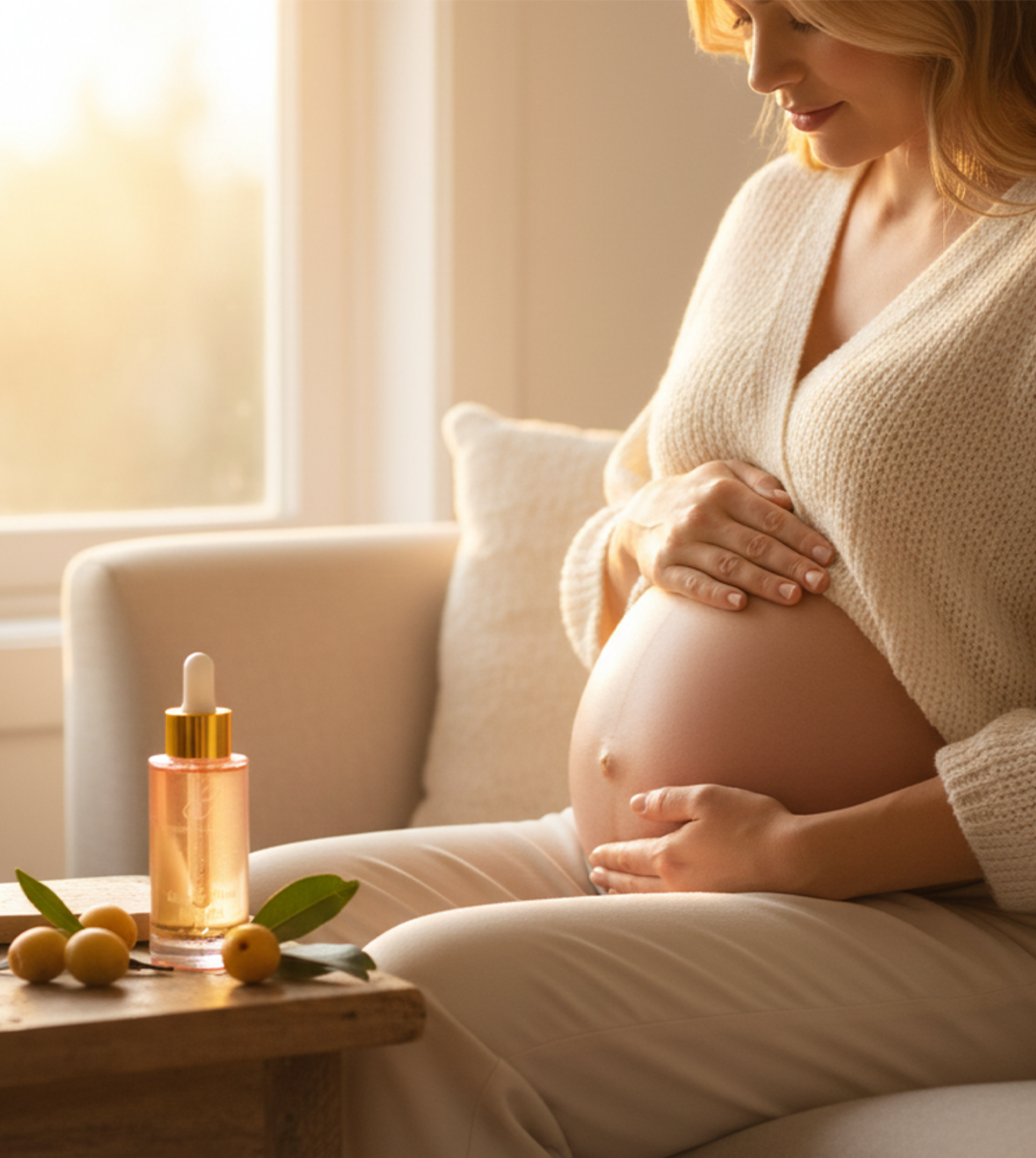
Why This Powerful Native Ingredient Is at the Heart of Our Pregnancy Belly Oil Pregnancy changes everything. Your body grows, stretches, adapts and transforms to create life. It is incredible, but it can also bring changes that many women are not prepared for. Dry skin.Tightness.Sensitivity.Stretching.Changes in texture and elasticity. During this time, your skin deserves the same care and attention you give to preparing for your baby. At Pregnancy & Baby Co, we believe motherhood should be supported from the very beginning. Our mission is to create thoughtful products that help women feel comfortable, confident and cared for throughout pregnancy and beyond. This is why we chose one of Australia’s most remarkable natural ingredients as the hero of our signature Belly Oil: Australian Kakadu Plum. What Is Kakadu Plum? Kakadu Plum (Terminalia ferdinandiana) is a small native Australian fruit found across Northern Australia. For generations, Kakadu Plum has been valued by Indigenous Australian communities and today it is recognised worldwide as one of nature’s richest sources of naturally occurring Vitamin C. This unique Australian botanical has become a sought-after ingredient in premium skincare because of its powerful antioxidant properties and ability to support healthy-looking skin. Why Vitamin C Matters During Pregnancy During pregnancy, your skin goes through rapid changes. As your belly grows, your skin stretches significantly over a relatively short period of time. Supporting your skin barrier, hydration and elasticity becomes an important part of your daily self-care ritual. Vitamin C is loved in skincare because it helps support: ✓ Collagen production✓ Skin firmness and elasticity✓ A healthy skin barrier✓ A brighter, more radiant appearance✓ Protection against environmental stressors Collagen is one of the key proteins responsible for keeping skin strong and supported. This is why Kakadu Plum became the perfect ingredient for our pregnancy skincare range. Supporting Stretching Skin Through Pregnancy One of the most common concerns women experience during pregnancy is stretch marks. Stretch marks are completely normal and are influenced by many factors including: • genetics• hormones• skin type• how quickly the skin stretches No product can completely prevent stretch marks, but nourishing your skin daily may help support hydration, softness and elasticity as your body changes. Your skincare routine becomes more than skincare. It becomes a moment to pause. A moment to connect with your changing body. A moment between you and your baby. Introducing Pregnancy & Baby Co Kakadu Plum Belly Oil Our Kakadu Plum Pregnancy Belly Oil was created specifically for the beautiful journey from bump to baby. A luxurious, lightweight oil designed to deeply nourish stretching pregnancy skin and leave your belly feeling soft, hydrated and radiant. Made with a carefully selected blend of natural oils: • Kakadu Plum Oil• Jojoba Seed Oil• Rosehip Oil• Sweet Almond Oil• Avocado Oil• Grapeseed Oil• Coconut Oil• Lemon Myrtle Oil Each ingredient was chosen to support dry, stretching skin while creating a calming daily pregnancy ritual. Why We Love Belly Oils During Pregnancy Unlike heavier creams, body oils help provide intense nourishment while leaving the skin feeling beautifully soft and cared for. Applying belly oil daily may help: ✓ Improve skin hydration✓ Reduce feelings of dryness and tightness✓ Support skin elasticity✓ Keep skin feeling smooth and supple✓ Create a relaxing connection ritual with your baby Massage gently into your belly, hips, breasts and anywhere your skin feels like it needs extra love. When Should You Start Using Pregnancy Belly Oil? You can start using a belly oil early in pregnancy. Many women begin during their first trimester and continue throughout pregnancy and postpartum as their body continues changing. Consistency is key. A few minutes each day caring for yourself can become a beautiful reminder that while you are growing your baby, you deserve care too. Is Kakadu Plum Belly Oil Pregnancy Safe? Yes. Pregnancy & Baby Co Kakadu Plum Belly Oil has been thoughtfully formulated for pregnancy and postpartum skin. Our formula is: ✓ Pregnancy friendly✓ 100% natural✓ Australian made✓ Rich in naturally occurring Vitamin C✓ Designed for pregnancy and postpartum care More Than Skincare At Pregnancy & Baby Co, we know motherhood is beautiful, but it can also be challenging. Women spend months preparing everything their baby needs. The nursery.The clothes.The hospital bag. But often forget themselves. Our products were created because mothers deserve support too. Your body is doing something extraordinary. Nourish it. Celebrate it. Care for it. From bump to baby. Shop Pregnancy & Baby Co Kakadu Plum Belly Oil Australian made pregnancy skincare designed to nourish, hydrate and support your changing body through pregnancy, postpartum and beyond. Frequently Asked Questions Does belly oil prevent stretch marks? Stretch marks are influenced by genetics, hormones and skin changes, so no skincare product can guarantee prevention. Keeping skin hydrated and nourished may help support elasticity and comfort during pregnancy. Can I use Kakadu Plum Belly Oil after birth? Yes. Many mothers continue using belly oil postpartum to nourish their skin as their body recovers and changes. Where should I apply pregnancy belly oil? Apply to areas experiencing stretching or dryness including your belly, hips, breasts and thighs. How often should I use belly oil? For best results, apply daily. Many women enjoy using it after showering as part of their evening pregnancy ritual.
Learn more